FADO brand
  News
News  Projects
  Career's
  All categories
  Engineering plumbing
  Heat pumps and boiler equipment
  Designer plumbing
 Technical support
  Marketing support
  Dealers
  For installers
  To projectors
  Warranty
  FAQ
FAQ 


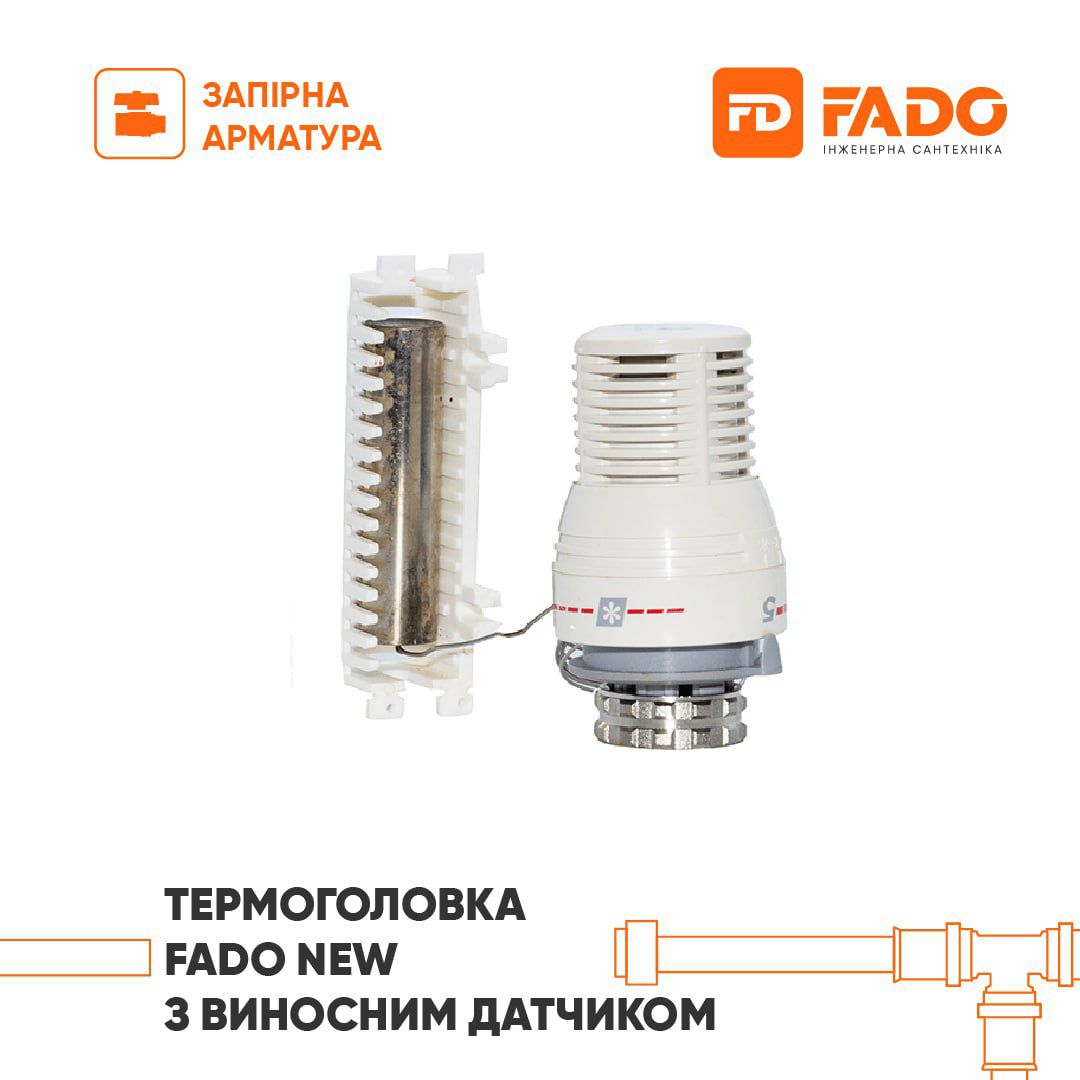
A thermostatic head is a simple and effective device for controlling the temperature in a room. However, even when installed correctly, it may not work as expected. Most often, the reason lies not in the head itself, but in the conditions of its operation.
Hidden installation traps:
One of the most common mistakes is to install the thermostatic head in places where it cannot adequately read the room temperature. These areas include:
- Behind curtains or curtains: Textiles create a localized warm zone around the head that does not reflect the overall room temperature.
- In niches: The confined space prevents air circulation and the head locks in an elevated temperature.
- Above the radiator: The warm air rising from the battery directly affects the head, forcing it to reduce the coolant supply prematurely.
The result of such mistakes: Incorrect operation of the heating system, temperature fluctuations in the room and, as a result, customer complaints about uncomfortable temperatures.
Solution: thermostatic head with remote sensor
To avoid such problems, the ideal solution is to use a thermostatic head with a remote sensor.
The remote sensor is installed on a wall at a height of more than 1 meter from the floor, in an area with free air circulation. This location provides the most accurate data on the room temperature and ensures correct operation of the thermostatic head.
Precision in every detail: how the thermostatic head works
The heart of the thermostatic head is toluene (methylbenzene), a heat-sensitive liquid that has been used in technology for over 80 years. Interestingly, this same substance is the basis for the manufacture of TNT. However, in a thermostatic head, toluene works for peaceful heat, acting as an ultra-precise "change sensor."
The mechanism of action is simple and reliable:
- A bellows filled with toluene: The liquid has a high coefficient of thermal expansion.
- Air heating: When the room temperature rises, the toluene expands and puts pressure on the valve stem, reducing the flow of coolant to the radiator.
- Air cooling: When the temperature drops, the toluene shrinks and the valve opens, increasing the flow of coolant.
It is important to note that the entire process is completely mechanical and does not require any connection to the power grid or smart home systems. It's pure physics and chemistry working for your comfort.
Main characteristics of the thermal head with remote sensor FADO NEW:
- Adjustment range: 6-28°C
- Capillary length: 2 м
- Operating temperature of the coolant: up to 100°C
- Thread: M30x1.5
Keep in mind the important points of installation and operation:
- Mount the head after the system has been pressurized.
- The thermostatic head must not be covered by textiles or furniture.
- The remote detector should be installed in a place protected from direct sunlight, drafts, and direct exposure to heat sources.
- After the end of the heating season, it is recommended to unscrew the head to the maximum (valve protection mode).
We hope this article has helped you to better understand the peculiarities of installing and operating thermostatic heads. Stay with us and follow the updates on our website, where you will find a lot more useful information from the world of engineering plumbing!